Can Wordle have double letters? Yes, and the colors count the copies
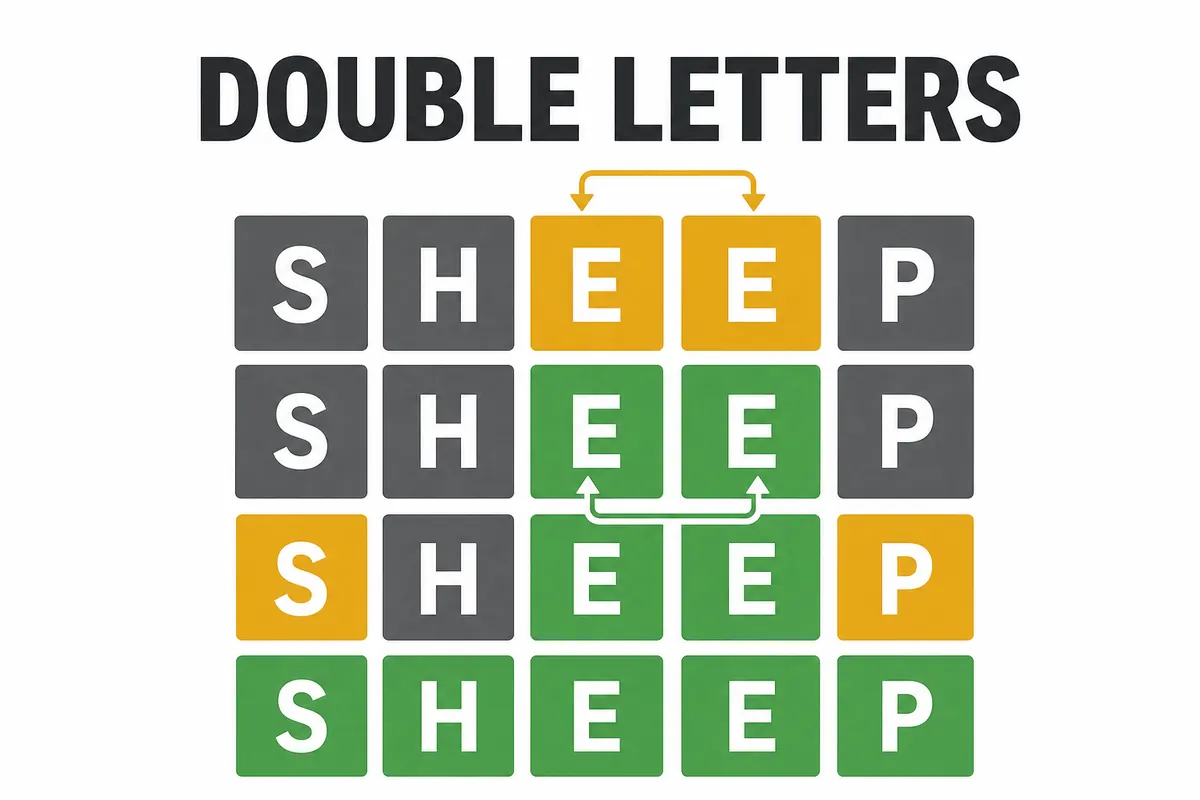
Can Wordle have double letters? Yes. A valid answer may use the same letter twice, such as the two E letters in SHEEP, the two L letters in ALLOW, or the two N letters in ANNEX. Repeated letters are not a special bonus or a mistake. They are part of the answer word, and the board evaluates them against the number of copies that the answer actually contains.
The most important Wordle double letters rule is that colored tiles are limited by the answer. A green tile proves that one copy is correct in that position. A yellow tile proves that another copy exists somewhere else, but not in that slot. A gray tile next to a colored copy often means the guess used more copies than the answer has. Read the row as a count, not as five independent yes-or-no signals.
If you want the short version, keep three habits: never assume a gray duplicate means the letter is completely absent, do not force a double into your first guess without evidence, and compare the number of colored copies with the number of copies in your guess. The same reasoning works in Wordless and other Wordle-style boards, including longer word lengths.
Wordle repeated letters at a glance
Use this table before you discard a letter or commit to a double. The exact row pattern matters more than the color of one tile viewed by itself.
| Board situation | What the colors tell you | Best next move | Common mistake |
|---|---|---|---|
| The answer contains a double | Two copies may receive green or yellow feedback when the guess places them usefully. | Keep both copies in the candidate pattern. | Assuming every answer uses unique letters. |
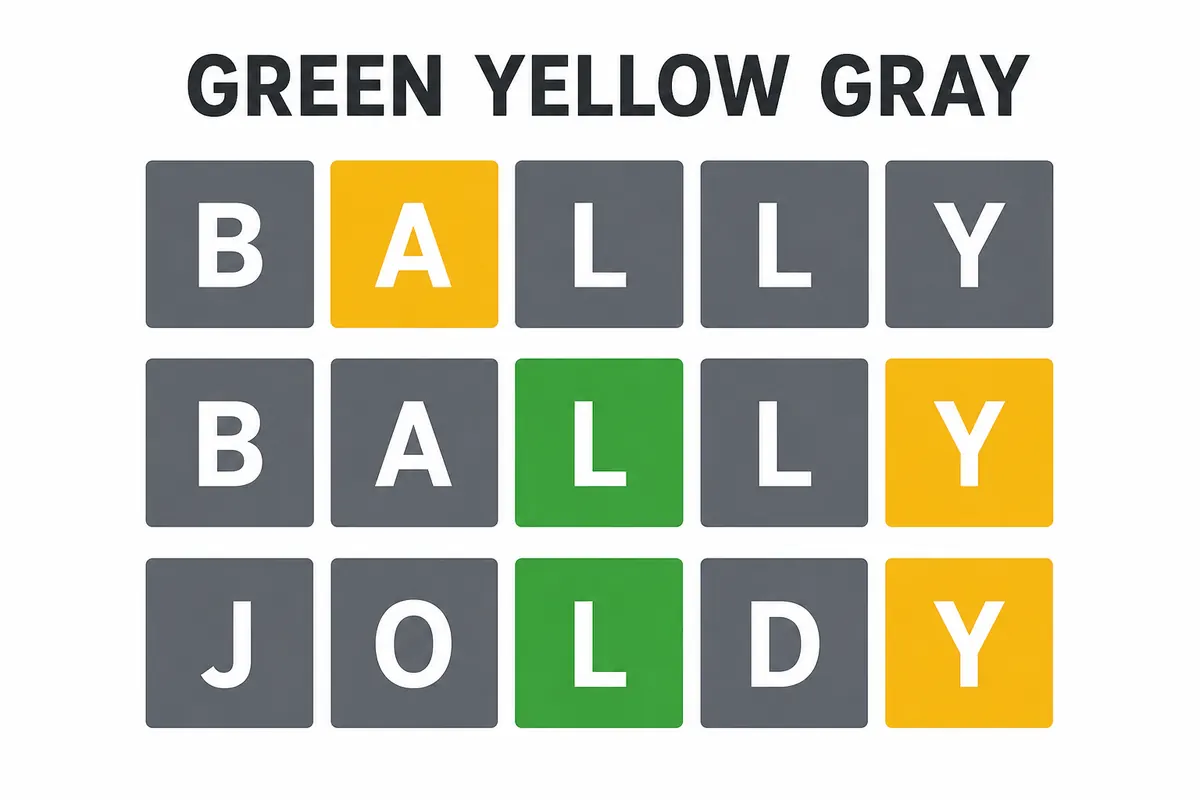
| One yellow copy and one gray copy | The answer often has one copy, while the guess tried two. | Keep the colored copy and test only one copy next. | Treating the gray tile as proof that the letter is absent. |
| Two green copies | The answer has the same letter in both fixed positions. | Lock both positions and solve the remaining slots. | Removing one copy because the word looks unusual. |
| A duplicate in the first guess | It tests fewer unique letters and gives less broad information. | Use it only when you have a pattern-based reason. | Calling it the best opener just because it can be correct. |
| Hard Mode after a duplicate clue | Known green and yellow copies must be respected in later guesses. | Count copies before choosing a legal follow-up. | Dropping a required copy or adding an unsupported one. |
1. What Wordle double letters actually means
The phrase Wordle double letters usually refers to an answer that contains two copies of one letter. It does not mean the game has a separate duplicate-letter mode. The board still has the same number of rows, the same color system, and the same requirement that the guess be a valid word. Only the letter count changes the way you interpret the feedback.
Consider SHEEP. The answer contains two E letters, one in the third position and one in the fourth. A guess that places E in either of those positions can earn green feedback. A guess that puts E somewhere else can earn yellow feedback if the answer still has an unused E copy. Once both copies have been accounted for, extra E tiles in the same guess may turn gray.
This is why repeated-letter questions often feel confusing. Players remember the color rule but forget that the answer has a limited supply of each letter. The board is not saying that a letter is globally good or bad. It is showing which copies of that letter have been matched and which copies still have no match.
- A double letter means two copies in the answer, not a new game mode.
- Each colored tile must be matched against an available copy in the answer.
- Extra copies in a guess can be gray after the answer's copies are used.
2. How Wordle counts repeated-letter copies
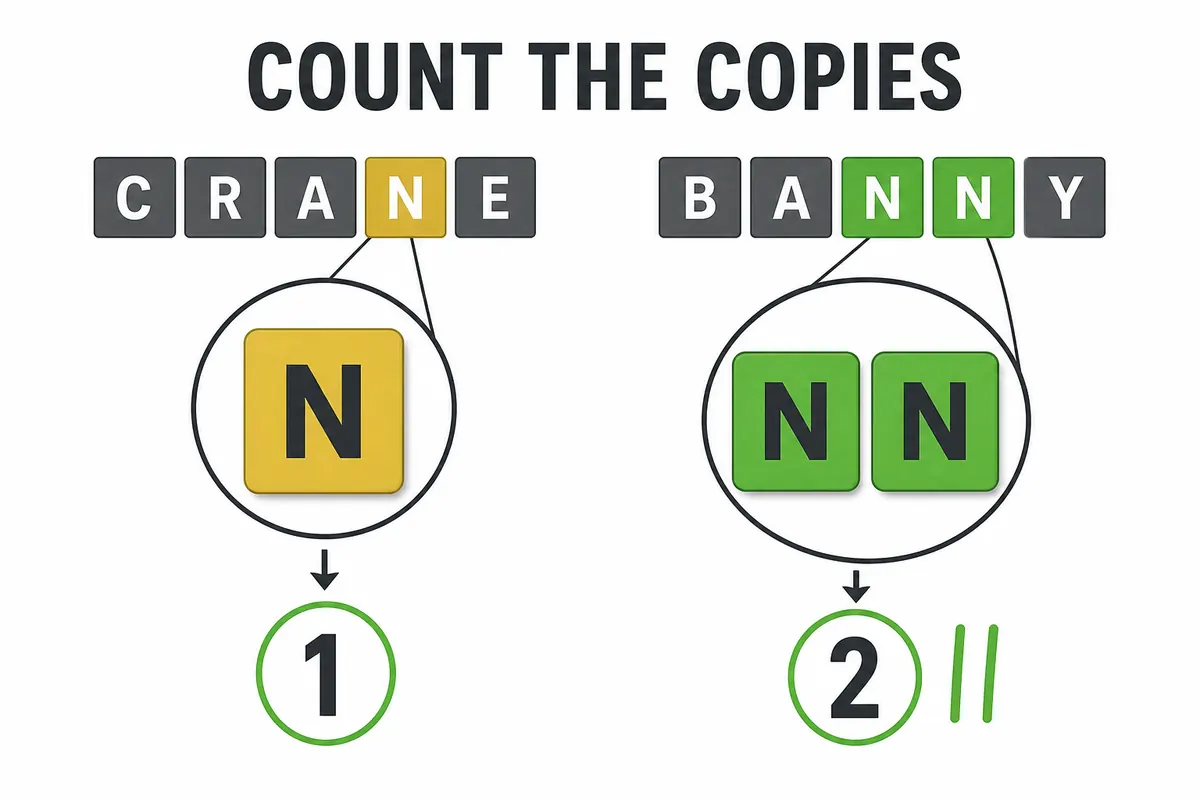
A practical way to read duplicate feedback is to count the answer's copies from strongest evidence to weakest. Green is strongest because both the letter and its position match. After green matches are assigned, yellow matches use any remaining copy that appears elsewhere in the answer. Any unmatched duplicate in the guess can then receive gray feedback.
For example, imagine the answer has one N but your guess contains N twice. If one N is in the right position, that tile can be green and the other N may be gray. If neither N is in the right position but the answer has one N, one of the two N tiles can be yellow and the other can be gray. The exact position changes which tile is colored, but the count stays the same: there is evidence for one N, not two.
Do not try to infer the answer from a single tile before checking the full row. A gray N in a guess with a yellow N is different from a gray N in a guess with no colored N. The first pattern is a count clue. The second pattern is stronger evidence that N is absent, subject to the usual duplicate and position checks.
- Read green matches first and keep their positions fixed.
- Use yellow matches for remaining copies in other positions.
- Treat unmatched duplicate tiles as count evidence, not automatic absence.
3. What one yellow and one gray letter can tell you
One yellow and one gray copy of the same letter is the pattern most likely to cause a wrong next guess. Suppose you play a word with two A letters, one yellow and one gray. The safe reading is usually that the answer contains A, but the guess included more A copies than the answer can use. Keep A in your candidate set, but stop assuming that the answer contains two As.
The position of the yellow tile still matters. Yellow means that this particular slot is wrong, so the next word should move the letter. The gray copy does not create a second forbidden position in the same way; it tells you that the extra attempted copy did not find an available match. Combine the count clue with the position clue rather than moving both As around at random.
This rule is useful with common patterns such as APPLE, LEVEL, EERIE, and ABBEY. A word can look as though it needs a double because the visible letters fit, but the feedback may tell you that only one copy is present. Conversely, two green copies are strong proof that the answer really does contain the double.
- Keep the colored copy, but do not automatically keep the gray duplicate.
- Move the yellow letter away from its guessed position.
- Use the number of colored copies to decide whether a true double remains possible.
4. Worked examples with repeated letters
Example one: the answer is SHEEP and your guess is EERIE. The guess contains three E copies. The board can award green to an E in the correct position, yellow to another E that exists in the answer but is misplaced, and gray to the remaining E after both answer copies have been matched. The important lesson is not the exact tile order. It is that the third E cannot create a third E in the answer.
Example two: the answer is ABBEY and your guess is ALLEY. The guess tests two L copies but the answer has no L, while the two B copies in the answer have not been tested. A weak player may see the repeated pattern and decide that all repeated letters behave the same. A stronger player separates the letters: L is unsupported, while B remains an open possibility that needs evidence.
Example three: the answer is CARRY and your guess is CRANE. The first C and R may create useful green or yellow clues, but the guess does not test a second R. If later evidence points to a pattern with R in two positions, the next guess should test the extra copy. Do not add a double just because R already appeared once; wait until the board or the remaining word pattern supports it.
- SHEEP versus EERIE shows how extra copies can become gray.
- ABBEY versus ALLEY shows that a repeated guess does not prove a repeated answer.
- CARRY shows why one colored copy is not enough evidence for a double.
5. When should you test a double letter?
In the first guess, unique-letter coverage is usually more valuable than a repeated letter. A word with five different letters can test more of the alphabet and give you a wider second-guess choice. That is why a double-letter opener can be valid but still inefficient for a general Wordle strategy. It spends a slot on a copy before the board has shown that the copy matters.
Test a double when the evidence earns it. Good signals include a colored copy plus a word pattern that normally needs another copy, two green positions with the same letter, or a small candidate list in which repeated-letter answers are plausible. Longer Wordless boards can also make repeated chunks more visible, so the best timing changes with word length.
When several answers remain, decide whether the next guess is for information or for the solve. An information guess can test the duplicate while checking new consonants. A solving guess should use the most likely pattern, even if it repeats a letter. The goal is not to avoid doubles forever; it is to spend them when they answer a specific question.
- Prefer unique-letter coverage before duplicate evidence appears.
- Test a double when colored clues or the candidate pattern support it.
- Choose between an information guess and a solving guess deliberately.
6. Common repeated-letter mistakes
The first mistake is treating every gray tile as an absolute ban. In a repeated guess, a gray copy may only mean that the answer has fewer copies than the guess. Check whether another copy of the same letter is green or yellow before removing the letter from your candidate list.
The second mistake is assuming that a yellow letter can be moved into any slot without checking the existing clues. Yellow only says the current slot is wrong. The letter still needs to fit the answer's count and a plausible word pattern. Moving a yellow duplicate into a slot occupied by a known green letter creates a new contradiction.
The third mistake is chasing a double too early. A player sees one yellow letter, guesses a word with two copies, and loses a row that could have tested four new letters. This is not a rule violation, but it is a poor information choice unless the candidate list already suggests a duplicate.
- Do not erase a letter before checking colored copies in the same row.
- Do not move yellow duplicates without checking positions and counts.
- Do not use a repeated-letter guess as a reflex when unique letters are still unknown.
7. Use a Wordle Solver without losing the logic
A clue-filtering solver is helpful after you have translated a repeated-letter row into constraints. Enter the green pattern, required yellow letters, wrong positions, and gray letters carefully. If you enter a gray duplicate as a total ban when another copy was yellow, the solver will remove valid answers and make the result look more certain than it is.
The best learning loop is to solve the row yourself first, then use the Wordle Solver to audit your candidate list. Compare the returned words with the number of copies that the board supports. If a candidate has two copies but the feedback only supports one, revisit the row before blaming the word list.
For a wider strategy routine, connect this page with the Wordle Strategy guide and the How to Play page. Use Wordle Hard Mode when you want to practice carrying known clues forward. If you want to inspect older answers, the Wordle Answer List is a reference, not a source of today's answer.
- Enter duplicate clues as counts, not just as a list of colors.
- Use the solver to review your reasoning before relying on its candidates.
- Keep daily play, archive research, and clue filtering as separate tasks.
FAQ about Wordle double letters
Can Wordle have double letters?
Yes. Wordle answers can contain two copies of the same letter, such as the E in SHEEP or the N in ANNEX. The board colors the copies according to their positions and the number of copies in the answer.
What does one yellow and one gray letter mean in Wordle?
When the same guessed letter appears once yellow and once gray, the answer often contains one copy while the guess tried two. Keep the colored copy, move it to a new position, and do not assume a second copy is present without more evidence.
Can a gray letter still be in the Wordle answer?
A gray duplicate can still be compatible with one colored copy of the same letter in that row. Read the full row and count colored copies before removing the letter completely.
Should my first Wordle guess use repeated letters?
Usually no, because unique letters test more information early. A repeated-letter first guess is reasonable when you are testing a known pattern, practicing a specific word family, or playing a longer board where the structure supports it.
How do repeated letters work in Wordle Hard Mode?
The repeated-letter count logic stays the same, but Hard Mode requires later guesses to keep known green and yellow clues. Count the supported copies before choosing a legal follow-up word.
Does Wordless use the same repeated-letter idea?
Wordless uses the same green, yellow, and gray clue logic for its Wordle-style boards. The exact word length can change the candidate list, but a colored copy still needs to be interpreted together with any duplicate copy in the guess.